“Virutcham” is a Tamil word that means tree, symbolizing growth, prosperity, and sustainability. It also represents TREE – Transformation of Resources for Environmental Enrichment.
Just like a tree reuses fallen leaves and organic matter to enrich the soil, Virutcham brings the same natural cycle into every household. Proper management of daily household waste can enrich soil, reduce pollution, and create economic opportunities.
Transform Household Waste into a Valuable Resource
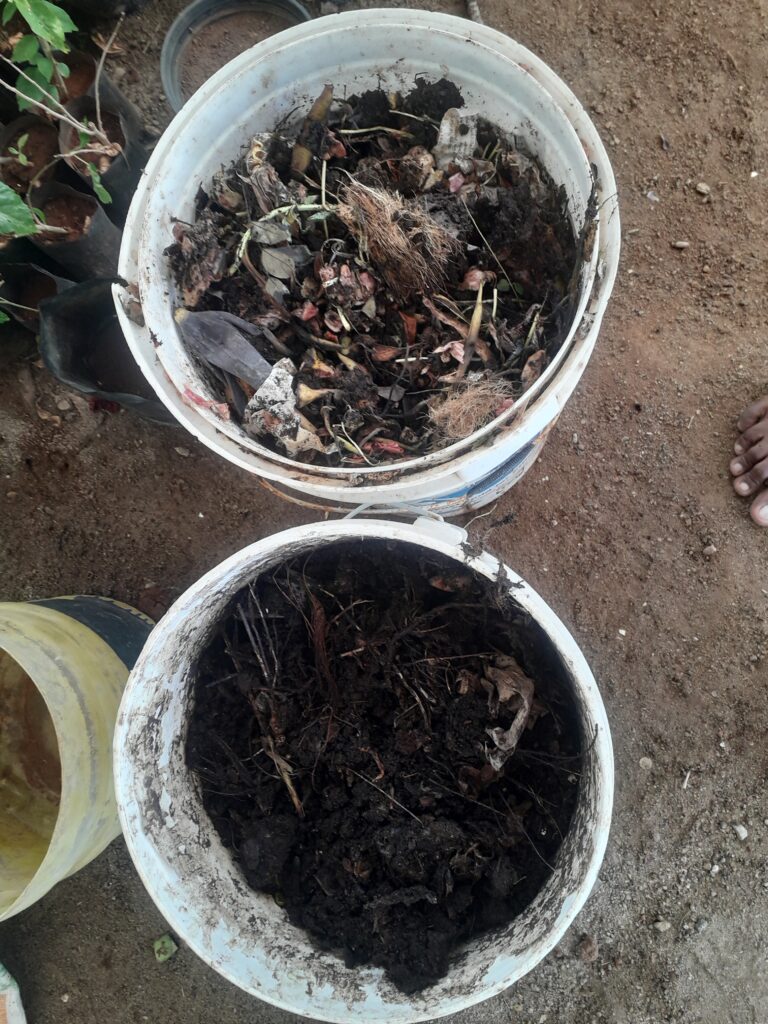
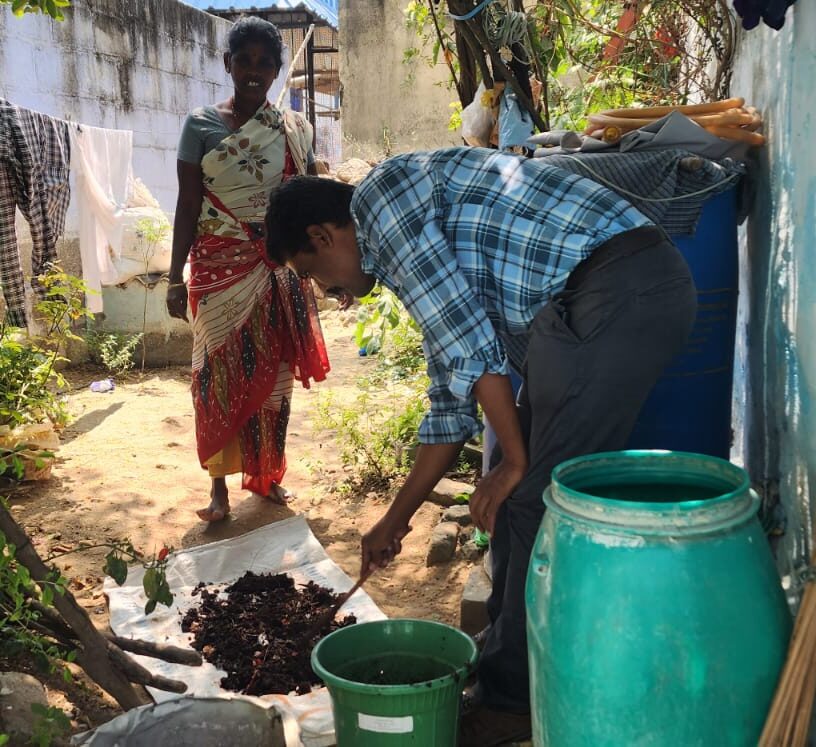
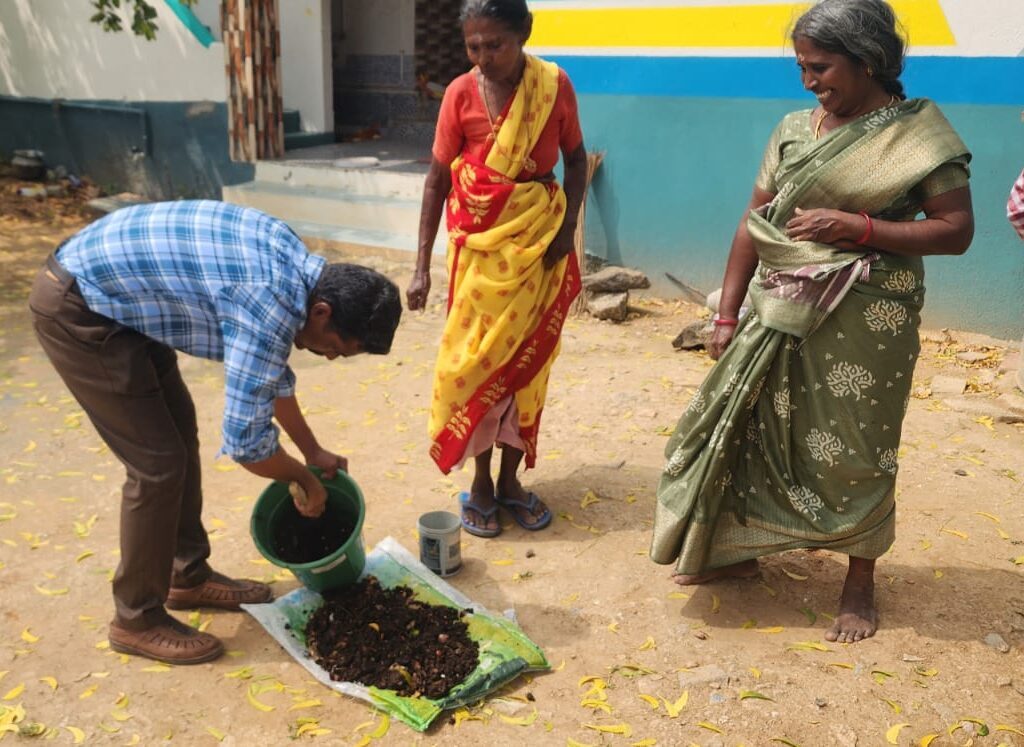
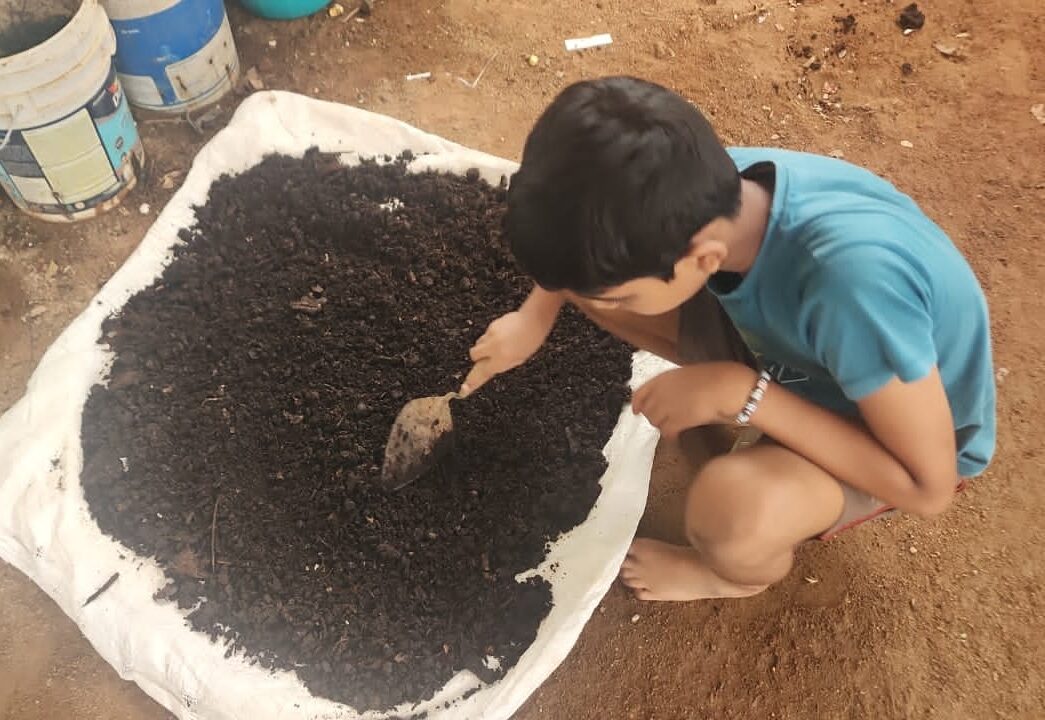
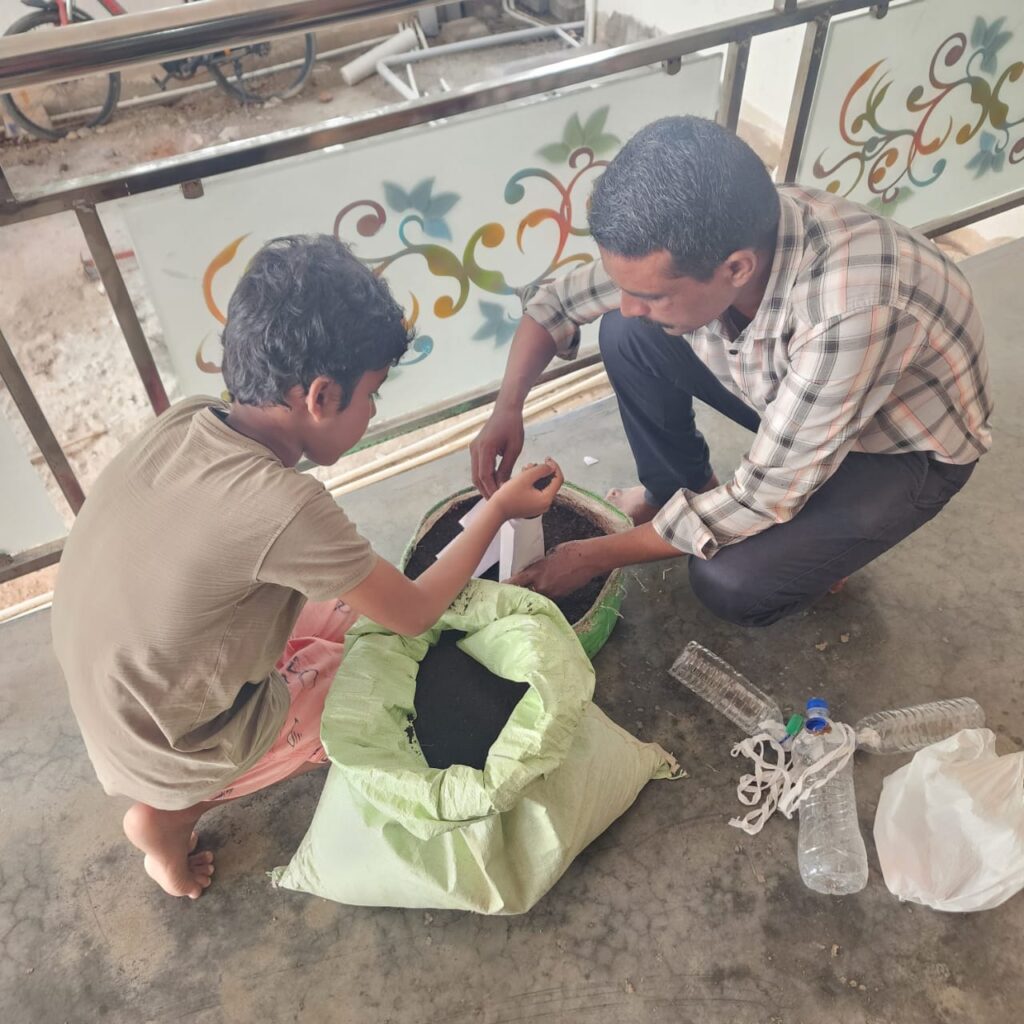
Homes can turn organic and recyclable waste into valuable resources instead of discarding it. Household waste can be composted to nourish plants, support home gardens, and improve the local environment.
Waste is not truly “waste,” but a resource in the wrong place. Households can manage resources effectively going beyond simple separationand directly repurpose, reuse, or recycle them into value-added products such as organic manure, compost, or nutritious produce for home gardens.
This approach helps reduce overall waste, supports a circular economy, and creates a cleaner, healthier lifestyle and greater self-sufficiency for every household. Virutcham empowers communities to view waste as a resource, fostering sustainable practices that protect the environment and enhance livelihoods. Participants learn to convert organic waste into nutrient-rich compost and transform non-biodegradable waste through eco-entrepreneurship.
Empowering Families and Communities
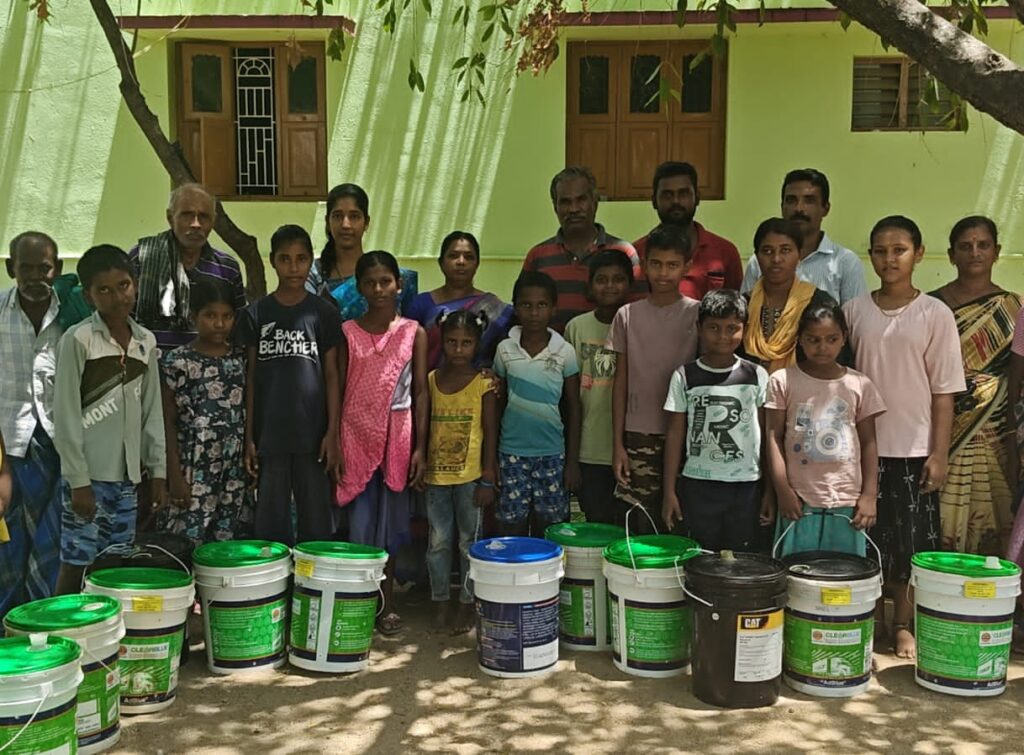
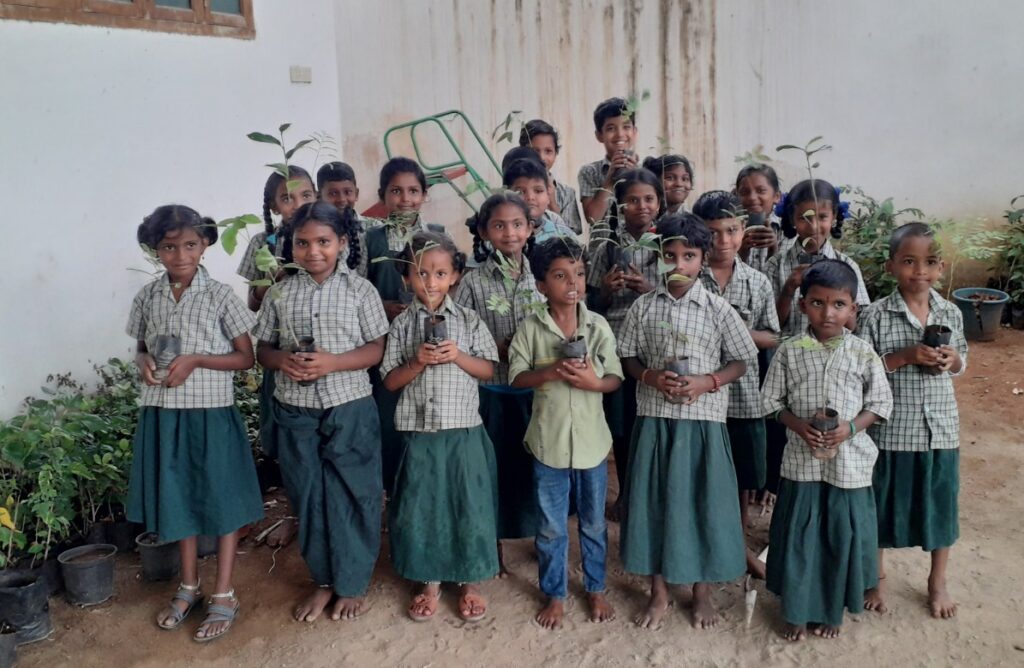
The Virutcham program is designed for small-scale household solid waste management. It equips families to handle organic and recyclable waste responsibly while promoting home gardening, organic farming, and sustainable food supply chains.Special emphasis is placed on educating children, women, and youth about sustainable waste practices, creating a culture of environmental stewardship within every household.
Community Participation and Ownership
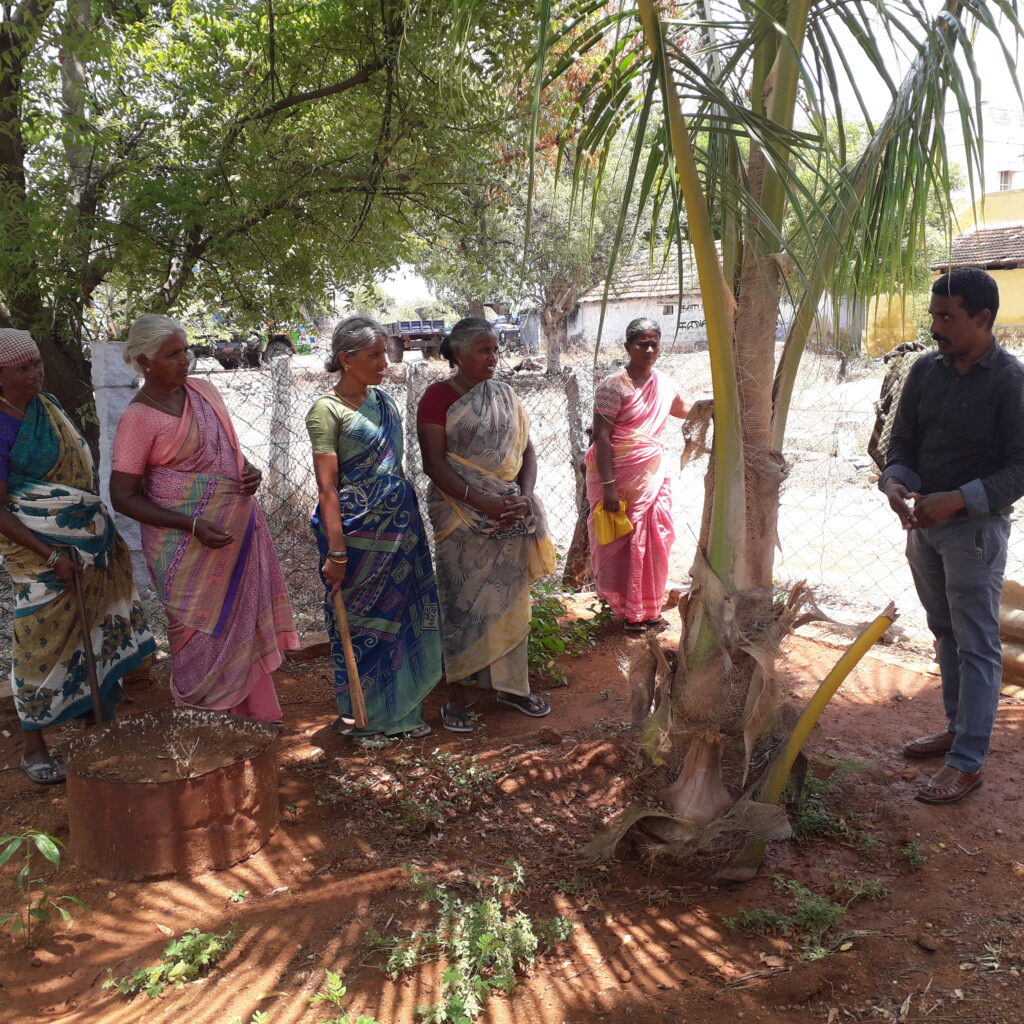
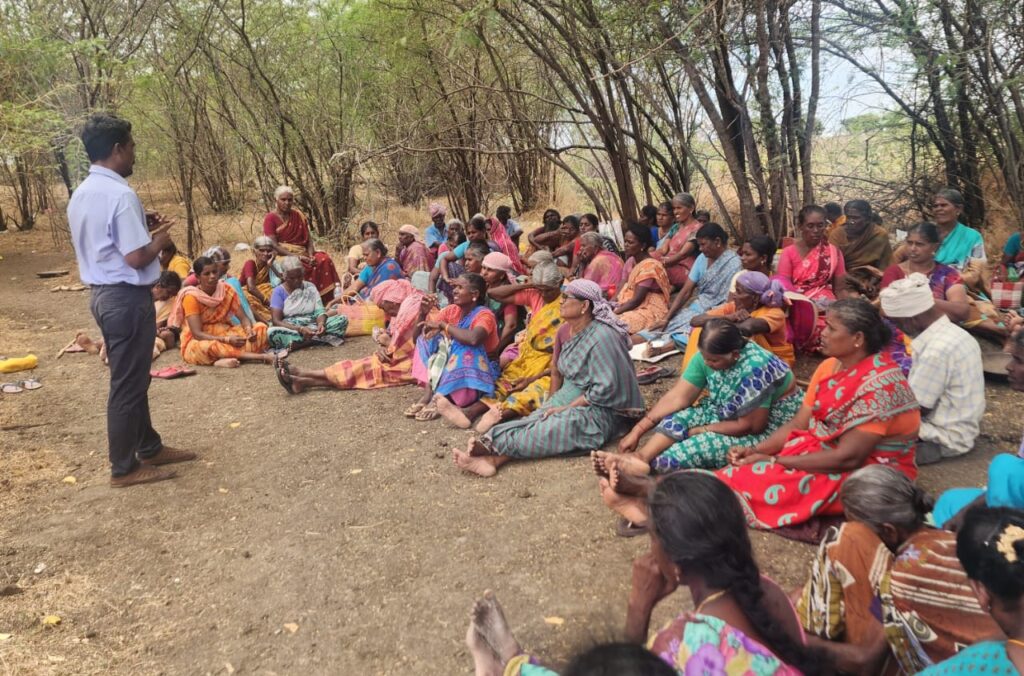
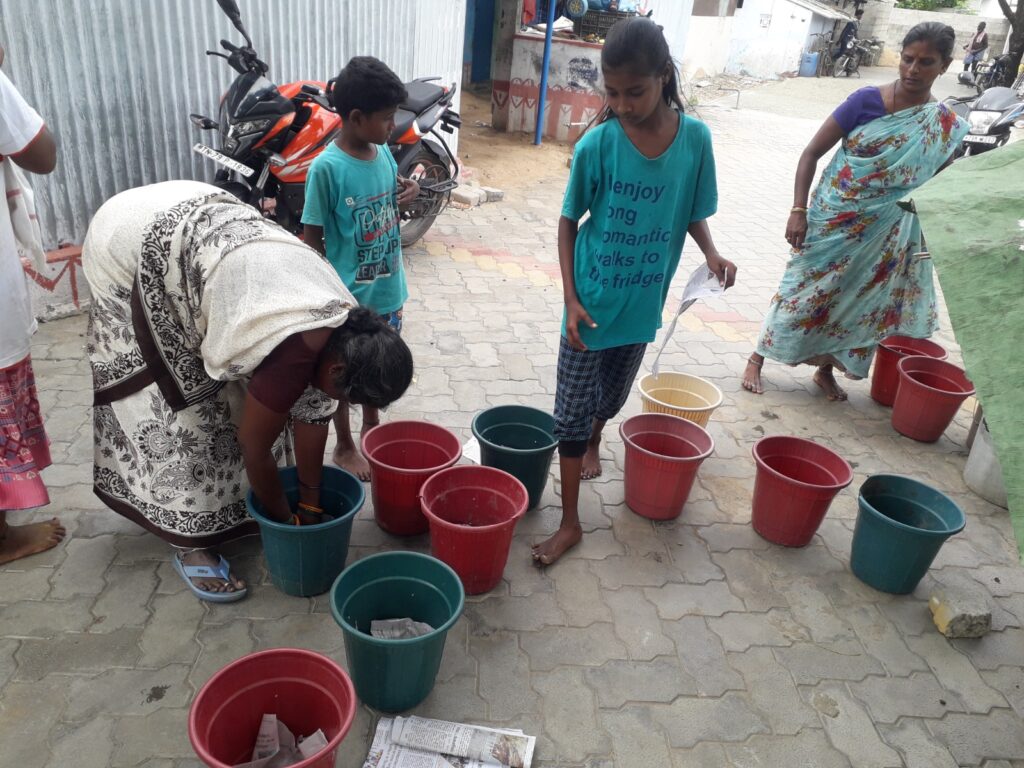
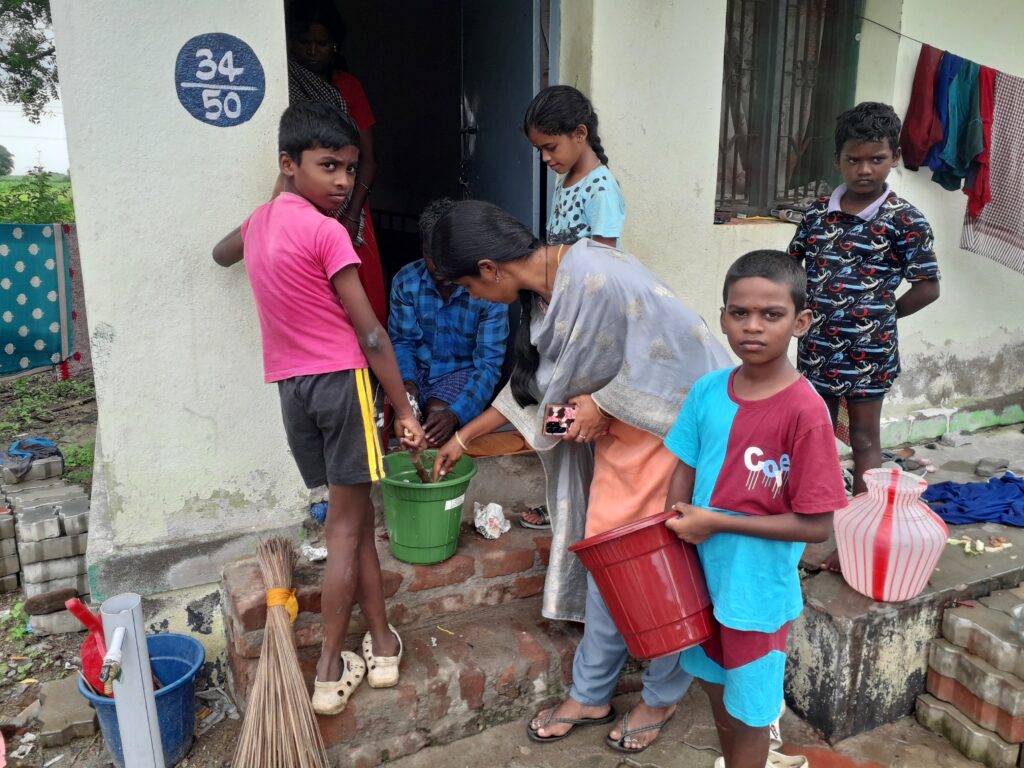
A key principle of Virutcham is community participation and ownership. Workshops, awareness drives, and hands-on training encourage residents, especially women, youth, and school children to take responsibility for their local environment and become eco-leaders.The program fosters long-term behavioral change, helping households adopt sustainable habits. Local circular economy models allow communities to recycle materials, use organic compost for gardening and agriculture, and reduce methane emissions from waste.